Best Turboprop Options for Short Trips: 2026 Performance & Cost Guide
The choice of an aircraft for regional missions is fundamentally an exercise in efficiency and accessibility. While the allure of the light jet remains strong in the popular imagination, the operational reality of “short-hop” aviation—typically defined as legs under 500 nautical miles—favors the turboprop with overwhelming mathematical and logistical force. A jet is at its least efficient during the climb and descent phases; on a 200-mile flight, a jet may never reach its optimal cruising altitude before it is forced to begin its descent, effectively burning a disproportionate amount of fuel for a negligible gain in block time.
For the corporate flight department or the owner-pilot, the “short trip” mission profile often involves secondary airports with runway lengths that would preclude jet operations. A turboprop’s ability to reverse its propeller pitch provides a braking force that allows for safe landings on 2,500-foot strips, often of turf or gravel, which are inaccessible to even the most capable light jets. This “last-mile” connectivity is the true value proposition of the category. It is not merely about flying; it is about landing closer to the final destination.
In 2026, the market for these airframes has been further refined by significant leaps in engine technology and avionics. The introduction of the GE Catalyst engine and the continued dominance of the Pratt & Whitney PT6 series have pushed the boundaries of what a single-engine turboprop can achieve. We are now seeing “single” platforms that rival twin-engine safety statistics while maintaining the lower operating costs of a simpler drivetrain. Navigating these options requires a departure from surface-level specifications to a deeper look at useful load, step-up costs, and mission-specific reliability.
Understanding “best turboprop options for short trips”
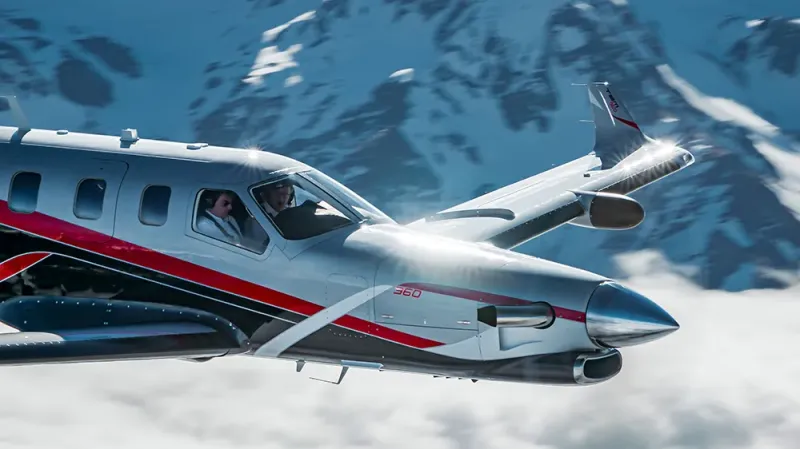
The term best turboprop options for short trips is frequently applied to a broad range of aircraft, yet the criteria for “best” are strictly mission-dependent. A common misunderstanding is that speed is the primary arbiter of value. On a 250-mile mission, the difference between a 330-knot TBM 960 and a 280-knot Pilatus PC-12 is roughly 8 minutes of flight time—a gap easily erased by a slightly longer taxi at a major hub or a slower approach sequence. In the context of short trips, “best” is redefined as the aircraft that offers the most usable cabin volume and the shortest takeoff distance for the lowest fuel burn.
Oversimplification in this sector often ignores the “Payload-Range” trade-off. Some of the most popular turboprops can either fly a long way with a light load or a short way with a heavy load, but rarely both at maximum capacity. For short trips, the “useful load” with full fuel is less relevant than the “zero-fuel weight” limits. If an executive team of six needs to move with heavy luggage, a high-speed but narrow-bodied turboprop may require two trips, whereas a slower, large-cabin aircraft like the Beechcraft King Air 260 could handle the mission in one.
Furthermore, the environmental and regulatory landscape of 2026 has introduced new variables. “Best” now includes the aircraft’s compatibility with Sustainable Aviation Fuel (SAF) and its external noise profile. Many municipal airports have instituted strict decibel limits for early morning and late-night departures; a turboprop with a five-blade composite propeller that significantly reduces the “blade-slap” noise may be the only option for certain noise-sensitive regional hubs.
Deep Contextual Background: The Evolution of Propeller Power
The turboprop engine—a turbine core driving a propeller via a reduction gearbox—was born from the need to bridge the gap between the slow, vibrating piston engines of the 1940s and the thirsty, high-altitude turbojets of the 1950s. The breakthrough was the Pratt & Whitney PT6, which debuted in the early 1960s. Its “reverse-flow” design made it incredibly compact and resilient, allowing it to become the heartbeat of the Beechcraft King Air, the aircraft that would define the corporate turboprop for six decades.
Systemically, the turboprop has survived multiple “death sentences” from the light jet industry. In the late 1990s, the “Very Light Jet” (VLJ) revolution promised to make turboprops obsolete. However, the VLJs lacked the ruggedness and cabin size of their prop-driven counterparts. The market eventually realized that for the vast majority of regional business travel, the “prop” was not a relic but a highly optimized solution for the lower altitudes (FL200 to FL280) where short trips are most efficiently flown.
Today, the evolution is focused on “Digital Engine Control” (FADEC). Historically, flying a turboprop required a pilot to manually manage temperatures and torque to avoid overstressing the engine. Modern iterations have automated this, making the best turboprop options for short trips as easy to operate as a modern automobile. This reduction in pilot workload has directly translated into a safer, more reliable platform for the owner-operator.
Conceptual Frameworks and Mental Models
To evaluate turboprop utility, one must look past the brochure and apply these three analytical filters:
1. The Block-Time Parity Model
Calculate the time difference between a jet and a turboprop for your specific route, including ground time. On trips under 300 miles, the “time saved” by a jet is often less than 15 minutes. If the jet costs $1,500 more per hour to operate, you are effectively paying $6,000 per hour for that saved time.
2. The “Short-Field Access” Multiplier
Count the number of airports within a 50-mile radius of your destination that have runways between 2,500 and 4,000 feet. If a turboprop can land at an airport 5 minutes from your meeting, but a jet must land 45 minutes away at a major international hub, the turboprop is the faster aircraft for the “total journey.”
3. The “Stage Length” Efficiency Curve
Understand that turboprops achieve their best fuel-to-distance ratio at lower altitudes than jets. A jet needs to get to 35,000+ feet to be efficient. On a short trip, a turboprop that cruises at 20,000 feet avoids the massive fuel burn of a long climb, making it the mathematically superior choice for missions with a stage length under 400 miles.
Key Categories and Variations
The market for turboprops is stratified by engine count and mission focus—primarily “Speed-First” versus “Utility-First.”
| Category | Primary Examples | Best Use Case | Trade-offs |
| High-Speed Single | Daher TBM 960, Piper M700 Fury | Owner-pilot, 1–3 pax, max speed. | Narrow cabin; limited payload. |
| Utility Single | Pilatus PC-12 NGX, Beechcraft Denali | 4–8 pax, rugged strips, cargo. | Slightly slower than TBM; larger footprint. |
| Executive Twin | Beechcraft King Air 260/360 | High-density teams, multi-engine peace of mind. | Higher fuel burn; more complex maintenance. |
| Short-Field Specialist | Daher Kodiak 100/900, Cessna Caravan | Gravel strips, heavy bulky cargo, bush flying. | Significantly slower; unpressurized (some models). |
Decision Logic: Single vs. Twin
In 2026, the “Single vs. Twin” debate has largely been settled by the reliability of the PT6 and Catalyst engines. However, for flights over large bodies of water or hostile terrain at night, many corporate flight departments still mandate a twin-engine platform like the King Air for the redundant “drift-down” capability it provides.
Detailed Real-World Scenarios
Scenario A: The Regional Site Visit
A construction executive needs to visit three job sites in one day, all within a 300-mile radius of the home office. Two sites are near small municipal airports with 3,200-foot runways.
-
The Choice: A Pilatus PC-12 NGX.
-
Logic: The large cargo door allows for bringing equipment or samples, and the short-field performance ensures they land at the closest possible airfields, saving hours in ground transport.
Scenario B: The “Owner-Pilot” Commute
A business owner commutes weekly between a mountain home and a coastal office (220 miles). They usually fly solo or with one colleague.
-
The Choice: A Daher TBM 960.
-
Logic: The speed of the TBM makes this a 45-minute flight. Its sports-car-like handling and advanced Garmin G3000 avionics provide the “tech-forward” experience this user desires without the massive hangar footprint of a larger aircraft.
Scenario C: The Multi-Stop High-Density Shuttle
A legal team of six needs to move between state capitals for hearings.
-
The Choice: A Beechcraft King Air 360.
-
Logic: The square-oval cabin provides more shoulder room for six adults to work simultaneously. The twin-engine reliability is a requirement for the firm’s insurance policy for carrying multiple “key-man” executives on one tail.
Planning, Cost, and Resource Dynamics
Operating one of the best turboprop options for short trips requires an understanding of “Direct Operating Costs” (DOC) vs. “Fixed Costs.”
Direct Operating Costs (DOC) – Estimated 2026
-
Fuel Burn: $400 – $900 per hour (depending on engine count and power setting).
-
Maintenance Reserves: $200 – $400 per hour (for engine overhauls and airframe inspections).
-
Landing/Handling: $50 – $300 per trip.
Annual Fixed Costs
-
Pilot Salary: $120k – $180k (if not owner-flown).
-
Hangarage: $1,500 – $4,000 per month.
-
Insurance: Highly dependent on pilot hours; typically $15k – $45k annually.
| Aircraft Model | Approx. Hourly DOC | Annual Fixed Costs | Total Annual (150 Hours) |
| Piper M700 Fury | $750 | $120,000 | ~$232,500 |
| Pilatus PC-12 NGX | $950 | $220,000 | ~$362,500 |
| King Air 360 | $1,600 | $280,000 | ~$520,000 |
Tools, Strategies, and Support Systems
Managing these aircraft effectively in 2026 involves a suite of digital and operational tools.
-
Engine Trend Monitoring (ETM): Systems that beam engine health data to the manufacturer in real-time, allowing for “on-condition” maintenance rather than rigid hourly intervals.
-
ForeFlight Performance Plus: Essential for calculating “Weight and Balance” for short fields where every pound of fuel or cargo affects takeoff distance.
-
Sustainable Aviation Fuel (SAF) Adapters: Modern seals and gaskets that allow for 100% SAF usage without engine modification.
-
Propeller Balancing Tools: Use of laser-balancing to reduce cabin vibration, a key factor in passenger fatigue.
-
Owner-Operator Training (SIMCOM/FlightSafety): Critical for mastering the “emergency flows” of high-performance turboprops.
Risk Landscape and Failure Modes
The turboprop environment has specific risks that differ from the jet world.
-
Icing Conditions: Because turboprops fly at lower altitudes, they spend more time in the “icing layers” (10,000 to 20,000 feet). Relying on de-icing boots rather than heated “weeping wings” requires active pilot management.
-
Runway Contamination: Short-field operations on wet or icy grass runways can lead to “hydroplaning” or excursions if the pilot relies too heavily on brakes rather than propeller reverse thrust.
-
Mismanagement of the “Beta” Range: Using the propeller’s reverse range (Beta) incorrectly on the ground can lead to engine surges or prop damage from debris.
Governance, Maintenance, and Long-Term Adaptation
A turboprop is a 30-year asset if managed with a “Preventative Governance” mindset.
-
The 10-Year Avionics Refresh: Airframes outlast their electronics. Plan for a major cockpit overhaul every decade to maintain resale value.
-
The “Hot Section” Inspection: A critical mid-life engine check for the PT6. Failing to budget for this is the number one cause of financial “shock” for new owners.
-
Corrosion Control: For aircraft based near salt water (short coastal trips), a rigorous “ACF-50” anti-corrosion treatment schedule is non-negotiable.
Measurement, Tracking, and Evaluation
How do you know if your turboprop is still the right tool?
-
Metric 1: Block Fuel per Passenger Seat. If this exceeds a light jet on your specific routes, the turboprop has lost its economic edge.
-
Metric 2: Departure Reliability. Monitor the percentage of missions cancelled due to “Mechanical” (AOG) vs. “Weather.” If weather cancellations are high, you may need a jet with a higher service ceiling to fly over the weather.
-
Metric 3: Resale Delta. Compare your aircraft’s value against the “Bluebook” average. High-maintenance logs and hangar-kept status usually preserve an extra 10%–15% of hull value.
Common Misconceptions and Oversimplifications
-
“Propellers are loud.” Modern 5-blade composite props are surprisingly quiet, often registering lower decibel levels in the cabin than some older light jets.
-
“One engine is half as safe as two.” Statistically, modern turbine engines are so reliable that most “incidents” are caused by fuel exhaustion or pilot error, not engine failure.
-
“Turboprops are for ‘bush’ pilots.” The interior of a modern King Air or PC-12 is indistinguishable from a luxury jet, featuring hand-stitched leather, satellite Wi-Fi, and fully enclosed lavatories.
Conclusion
The “Best” turboprop for a short trip is ultimately a reflection of the traveler’s values—whether those values favor the raw speed of a TBM, the cavernous utility of a PC-12, or the multi-engine stability of a King Air. In 2026, as the aviation industry moves toward greater efficiency and localized regional connectivity, the turboprop has reaffirmed its status as the most rational choice for the mission. It is a category that rewards those who prioritize ground-time reduction, operational flexibility, and fiscal responsibility over the high-altitude glamour of the jet.