
How to Avoid Empty Leg Travel Risks: 2026 Strategy Guide
The private aviation market is often characterized by its pursuit of efficiency, yet one of its most persistent structural inefficiencies—the empty leg—remains a source of both significant opportunity and substantial risk. An empty leg, or “ferry flight,” occurs when an aircraft must fly without passengers to reposition for its next scheduled charter or return to its home base. While these flights are frequently marketed as a way to access private travel at a steep discount, they are fundamentally different from standard on-demand charters in their legal, operational, and financial DNA.
For the uninitiated traveler, the allure of a heavy jet at a turboprop price point is compelling. However, the systemic reality of the empty leg is that the passenger is not the priority; the aircraft’s primary mission is. This inverted priority creates a volatile environment where schedules can shift with little notice and cancellations are not merely a possibility but a structural feature of the product. To engage with this segment of the market effectively, one must move beyond the transactional mindset and adopt a strategic one that accounts for the high probability of logistical friction.
Navigating this space requires a sophisticated understanding of how operators manage their fleets and how brokers interface with retail clients. The risks associated with empty legs are not limited to the flight itself but extend to the secondary costs of “recovery” flights and the potential for stranded travelers. This analysis serves as an exhaustive reference for those seeking to integrate empty leg travel into their aviation strategy while maintaining a rigorous defense against its inherent instabilities.
Understanding “how to avoid empty leg travel risks”
To master how to avoid empty leg travel risks, one must first deconstruct the “Passenger of Convenience” status. In a standard charter, the operator is contractually bound to your schedule. In an empty leg scenario, you are effectively hitchhiking on a pre-existing logistical move. If the primary charter—the one the aircraft is repositioning for—is canceled, changed, or delayed, your flight ceases to exist or moves to a time that may no longer suit your needs.
A multi-perspective view reveals that risks are often hidden in the “Terms and Conditions” that brokers rarely emphasize. From the operator’s perspective, the empty leg is found money; it offsets fuel costs for a move they had to make anyway. Because the revenue is marginal, the operator has zero incentive to “recover” an empty leg passenger if a mechanical issue arises. If the jet breaks, you aren’t getting a replacement; you are getting a refund and a sincere apology while standing on the tarmac.
Oversimplification in this sector leads to the “Budget Fallacy”—the belief that a $5,000 empty leg is always cheaper than a $15,000 commercial first-class ticket. When the empty leg is canceled four hours before departure and the traveler is forced to buy a last-minute, full-fare commercial ticket or a retail-priced on-demand charter to make a critical meeting, the “discount” evaporates. True risk avoidance in this domain is less about finding the cheapest flight and more about calculating the “Total Cost of Certainty.”
Deep Contextual Background: The Evolution of Repositioning
The empty leg market has evolved from a quiet, “insider-only” byproduct of corporate flight departments into a highly commoditized digital marketplace. Historically, these flights were only known to the pilots and a few savvy brokers who would “hand-sell” the seats to flexible local clients. The lack of transparency was a feature, as operators were wary of devaluing their primary charter product.
The systemic shift occurred with the rise of global “Fleet Management Systems” and digital aggregators in the mid-2010s. For the first time, empty leg inventory was broadcast in real-time to thousands of potential flyers. This democratization, however, brought a wave of travelers who did not understand the “subject to change” nature of the flights. Operators found themselves dealing with disgruntled passengers who expected a “NetJets-level” service on a “Spirit-Airlines-budget” repositioning flight.
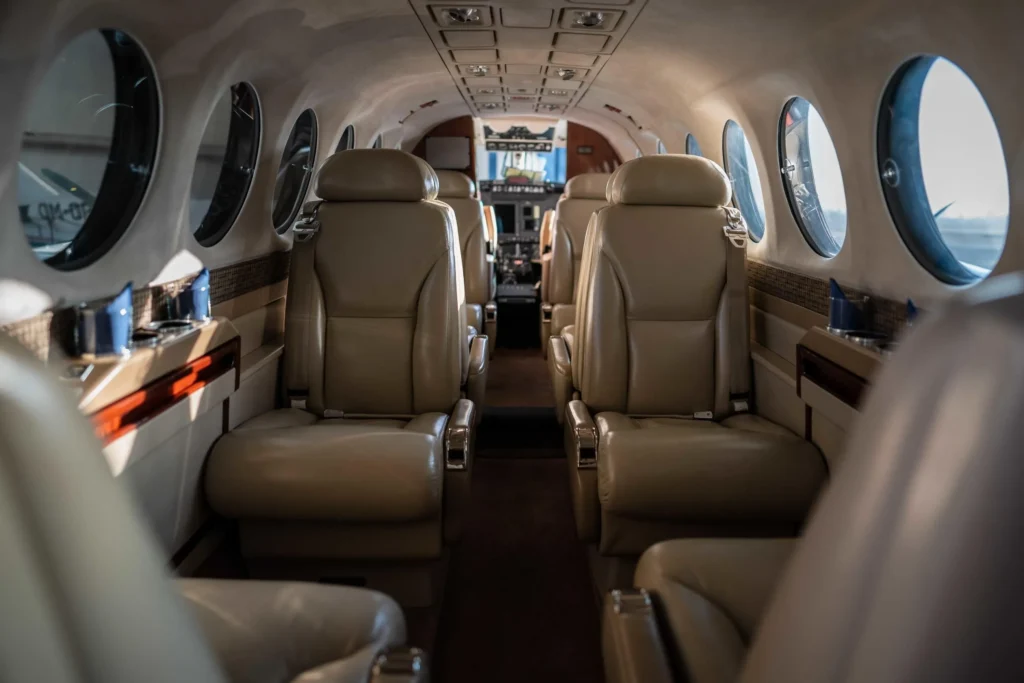
Today, in 2026, the market has reached a state of “Logistical Fragility.” With high pilot turnover and tight maintenance windows, aircraft schedules are more fluid than ever. The empty leg is now a high-stakes game of algorithmic matching. Understanding the historical context of these flights as “incidental moves” rather than “scheduled services” is the first step in avoiding the disappointment and financial loss that occurs when those moves are disrupted.
Conceptual Frameworks and Mental Models
To evaluate an empty leg opportunity, apply these three mental models:
1. The “Primary Mission Dependency” Filter
Always ask: What is the mission that created this empty leg? If the jet is repositioning for a high-value owner’s international trip, the empty leg is relatively stable. If it is repositioning for an on-demand charter that has a liberal cancellation policy, the risk is exponentially higher. Knowing the “anchor mission” provides a baseline for reliability.
2. The “Recovery Cost” Hedge
Before booking, calculate the cost and availability of a “Plan B.” If there are no commercial flights or other charter options available for your route on that day, the risk of being stranded is 100%. Never book an empty leg where the “Recovery Cost” (the price of the last-minute alternative) exceeds the savings of the empty leg itself.
3. The “Last-to-Know” Information Gap
In the hierarchy of communication, the empty leg passenger is always last. The broker talks to the operator, the operator talks to the primary charterer, and you get the update only after a decision has been finalized. A mental model for success here involves assuming a 2-hour “information lag” and planning your ground logistics with that buffer in mind.
Key Categories and Variations
Not all ferry flights carry the same level of risk. They generally fall into several operational categories.
| Category | Description | Risk Level | Reliability Logic |
| Home-Base Return | Aircraft returning to its “home” hangar after a mission. | Moderate | High reliability if the aircraft is “done” for the day. |
| Pre-Charter Move | Aircraft flying to pick up a high-value client. | High | Highly sensitive to the primary client’s whims. |
| Maintenance Ferry | Aircraft flying to a service center for scheduled work. | Low | Fixed date, but potential for “unairworthy” status. |
| Multi-Leg “Zig-Zag” | A complex series of short moves between missions. | Extreme | Compounding delays across several previous legs. |
Detailed Real-World Scenarios
Scenario A: The “Cascade” Cancellation
A traveler books an empty leg from Palm Beach to Teterboro. The jet is currently in Aspen, supposed to fly a primary charter to Palm Beach first. The Aspen flight is delayed 4 hours due to snow.
-
The Risk: The operator decides the crew will exceed their “Duty Day” if they perform your empty leg after the Aspen mission. Your flight is canceled.
-
The Avoidance Strategy: Only book “end-of-day” empty legs where the aircraft is already on the tarmac at your departure point.
Scenario B: The “Mechanical” No-Show
You are at the FBO (Fixed Base Operator) lounge. The pilot calls to say there is an oil pressure warning.
-
The Risk: Since you are on an empty leg, the operator will not pay for a “sub-charter” to get you home. They will simply refund your money.
-
The Avoidance Strategy: Ensure you have an “Overnight/Stranded” contingency fund that covers a luxury hotel and a last-minute commercial flight.
Scenario C: The “Owner Override”
An empty leg is available because the owner’s jet is empty. Suddenly, the owner’s spouse decides to join the trip, or they decide to leave four hours earlier.
-
The Risk: Your “fixed” departure time is moved. If you can’t make the new time, you forfeit the seat.
-
The Avoidance Strategy: Maintain a “12-hour window” of flexibility. If you must be at a destination at a precise time (a wedding, a board meeting), the empty leg is the wrong tool for the job.
Planning, Cost, and Resource Dynamics
The economics of empty legs are seductive but deceptive. To truly understand how to avoid empty leg travel risks, one must look at the hidden costs.
Range-Based Table of Potential “Real” Costs
| Item | Quoted Cost | Potential “Hidden” Cost | Total Risk Exposure |
| Midsize Jet (2hr) | $4,500 | $8,000 (Last-minute charter) | $12,500 |
| Heavy Jet (5hr) | $12,000 | $4,000 (Last-minute First Class) | $16,000 |
| Turboprop (1hr) | $1,800 | $1,200 (Ground Transport) | $3,000 |
Opportunity Cost and “Time-Value” Risk
The most significant “cost” is the executive’s time. If an executive earns $2,000 per hour and spends 4 hours dealing with a canceled empty leg, the “savings” of the flight have been completely negated by the loss of productivity.
Tools, Strategies, and Support Systems
-
FlightAware/FlightRadar24 Tracking: Don’t wait for the broker to tell you where the plane is. Track the “tail number” yourself. If the plane hasn’t left its previous destination, you know your empty leg is in jeopardy.
-
Flexible Ground Transport: Never book non-refundable car services for an empty leg. Use on-demand ride-hailing or services with a “zero-hour” cancellation policy.
-
The “Two-Airport” Backup: Only book empty legs between hubs that have robust commercial service (e.g., TEB to VNY). If the private flight fails, you can be at EWR or LAX in 30 minutes for a commercial backup.
-
Escrow-Based Payments: Ensure your funds are held in an escrow account, not directly by a broker who might have liquidity issues.
-
Direct-to-Operator Platforms: Using platforms that connect you directly with the operator (bypassing the traditional “retail” broker) can sometimes provide faster communication regarding schedule changes.
-
“Interchange” Jet Cards: Some high-end jet cards offer “guaranteed” empty legs as a perk, which often carry better recovery terms than one-off retail bookings.
Risk Landscape: A Taxonomy of Uncertainty
-
Operational Risk: Mechanical failures, crew duty-day limits, and weather-related diversions.
-
Contractual Risk: “Force Majeure” clauses and the lack of “guaranteed recovery” which are standard in empty leg contracts.
-
Financial Risk: Loss of non-refundable deposits for hotels or connecting travel at the destination.
-
Reputational Risk: For a professional, missing a high-stakes event due to a “discounted” travel choice can carry long-term career costs.
Governance, Maintenance, and Long-Term Adaptation
If you intend to use empty legs as a regular part of your travel mix, you must implement a personal “Governance Checklist.”
The “Empty Leg Ready” Checklist
-
Tail Number History: Checked the aircraft’s recent dispatch reliability on public tracking sites?
-
Operator Safety Rating: Is the operator ARGUS Platinum or Wyvern Wingman? (Lower-tier operators often have more mechanical delays).
-
The “Go/No-Go” Time: Establish a time (e.g., 4 hours before departure) where if the flight isn’t “wheels up” from its previous location, you automatically trigger your commercial backup plan.
-
Refund Terms: Verified that the refund is processed in days, not weeks?
Measurement, Tracking, and Evaluation
A sophisticated traveler tracks their “Success Ratio.”
-
Reliability Percentage: (Completed Empty Legs) / (Booked Empty Legs). If this is below 70%, the strategy is statistically failing.
-
Effective Savings Delta: (Total Cost of Commercial Backup + Empty Leg Cost) vs. (Total Cost of Standard Charter). This determines if the risk-taking is actually paying a “dividend.”
-
Stress-to-Benefit Ratio: A qualitative measure. If the anxiety of potential cancellation outweighs the enjoyment of the flight, the “luxury” element is lost.
Common Misconceptions and Oversimplifications
-
“I’m entitled to a replacement jet.” You are not. This is the most dangerous assumption in private aviation.
-
“The plane is empty, so they’ll wait for me.” They won’t. The aircraft has a “slot” or a “window” to get to its next mission. If you are 20 minutes late, they may leave without you to preserve the primary charter.
-
“It’s just like a regular charter once I’m on board.” While the cabin service is the same, the “mission focus” is different. The crew’s priority is getting the aircraft to its next base, not necessarily providing a leisurely experience.
-
“Brokers have ‘secret’ stable empty legs.” All empty legs are subject to the same laws of physics and logistics. No broker can “guarantee” a repositioning flight.
Conclusion
Mastering how to avoid empty leg travel risks is an exercise in managing expectations and maintaining redundant systems. The empty leg is a powerful tool for the flexible traveler, but it is a “secondary” product that demands a “primary” level of planning. By treating the empty leg as a logistical “bonus” rather than a guaranteed “service,” and by maintaining a rigorous “Plan B” at all times, the traveler can enjoy the benefits of private aviation without falling victim to its most common pitfalls. Success in this market is reserved for those who value their time enough to plan for the moment the “discount” flight disappears.