
How to Manage Private Jet Depreciation: The Asset Preservation
The acquisition of a private aircraft is frequently categorized as a peak achievement in capital allocation, yet the subsequent fiscal reality is often defined by the relentless pressure of value erosion. For the high-net-worth individual or the corporate flight department, the aircraft is not merely a tool for mobility; it is a volatile financial instrument that begins to lose market value the moment the delivery documents are signed. How to Manage Private Jet Depreciation. Understanding the mechanics of this decline is essential for any stakeholder looking to preserve the underlying equity of the asset.
Managing a multi-million dollar asset requires a shift from viewing the aircraft as a luxury convenience to viewing it as a managed liability. The market for pre-owned jets is highly efficient and remarkably unsympathetic to poor stewardship. Factors such as total airframe hours, engine cycles, maintenance pedigree, and cabin configuration converge to create a valuation profile that can fluctuate wildly based on global economic shifts and technological advancements.
This analysis serves as a comprehensive guide for those tasked with the long-term oversight of aviation assets. It moves beyond the surface-level advice of “keep it clean” to investigate the structural, regulatory, and market-driven forces that dictate how value is lost and, more importantly, how that loss can be mitigated through rigorous planning and data-driven decision-making.
Understanding “how to manage private jet depreciation”
At its core, knowing how to manage private jet depreciation is an exercise in managing the delta between book value and market reality. Depreciation in aviation is rarely linear. It is a staggered descent influenced by specific “cliff” events—such as the release of a newer model or the requirement of a heavy structural inspection—that can shave 10% to 15% off an aircraft’s value in a single quarter.
A common misunderstanding among new entrants to the market is the belief that depreciation is purely a function of age. While chronological age is a baseline, the market places a much higher premium on “utility remaining.” An older aircraft with low total time and a fresh engine overhaul may command a higher price than a younger aircraft that has been utilized heavily in a high-cycle charter environment. Oversimplifying this dynamic leads to poor acquisition choices and even poorer exit strategies.
Furthermore, managing depreciation is not synonymous with stopping it. Physical assets decay; technology becomes obsolete. The goal is “optimized deceleration.” This involves a sophisticated dance between operational expenditure (OpEx) and capital expenditure (CapEx). Spending too little on maintenance leads to a “deferred maintenance” penalty at the time of sale, while spending too much on cosmetic upgrades may never yield a 1:1 return on investment. The successful manager identifies the “sweet spot” where the cost of preservation does not exceed the value preserved.
The Evolution of Aviation Asset Valuation
The historical trajectory of private jet valuation has shifted from a “buy and hold” mentality to a “highly liquid, high-turnover” model. In the late 20th century, aircraft held their value remarkably well due to slower technological cycles and a limited pool of manufacturers. A Gulfstream II or a Learjet 35 could serve a corporation for two decades without feeling fundamentally “old.”
Today, the cycle of innovation has accelerated. Avionics suites that were state-of-the-art five years ago are now being rendered obsolete by new mandates for satellite-based navigation and data-link communication. This technological “creep” creates a new form of functional obsolescence. If an aircraft requires a $500,000 cockpit upgrade to remain compliant with international airspace regulations, the market value of that aircraft effectively drops by that amount unless the upgrade is performed.
Systemically, the rise of fractional ownership and jet cards has also impacted the pre-owned market. There is now a steady supply of well-maintained, high-utilization aircraft entering the secondary market, which puts downward pressure on the prices of “legacy” aircraft owned by individuals. The modern owner is no longer competing against other individuals, but against sophisticated fleet operators who treat depreciation as a high-volume science.
Mental Models for Equity Preservation
To effectively conceptualize the preservation of value, several mental models can be applied:
-
The “Maintenance as Investment” Model: Instead of viewing a C-Check or an engine mid-point inspection as a sunk cost, it is viewed as a restoration of equity. In this model, an aircraft with an “enrolled” engine program is seen as having a portable, liquid asset attached to the airframe.
-
The Second-Order Effect of Utilization: Doubling the flight hours of a jet doesn’t just increase fuel costs; it accelerates the aircraft toward its next major inspection interval. This “cycle-heavy” usage creates a compounding effect on depreciation that is often invisible until the aircraft is appraised.
-
The Obsolescence Horizon: Every aircraft has a point in time where the cost of its next major maintenance event will exceed 50% of its market value. Identifying this horizon years in advance allows owners to exit the asset while it still has significant utility to a secondary buyer.
Categories of Value Erosion and Trade-offs
When determining how to manage private jet depreciation, one must categorize the sources of value loss into manageable silos.
| Category | Primary Driver | Mitigation Strategy | Trade-off |
| Physical Wear | Flight hours/Cycles | Low-utilization strategy | Higher cost per hour flown |
| Technological | Avionics/Connectivity | Modular hardware upgrades | High upfront CapEx |
| Regulatory | ADS-B, FANS, Noise | Proactive compliance | Short-term downtime |
| Cosmetic | Paint/Interior wear | Frequent detailing/Refurb | Interruption of service |
| Programmatic | Engine/Parts programs | Full hourly enrollment | High fixed monthly costs |
| Market Sentiment | Model reputation/OEM | Selecting “liquid” models | Higher initial purchase price |
The Logic of Selection
A “liquid” model—one with a broad global fleet and multiple service centers—will always depreciate more predictably than a niche or “orphan” aircraft. While a niche aircraft might offer a lower entry price, the lack of a secondary market can lead to a “valuation trap” where the owner is forced to accept a fire-sale price to exit.
Real-World Scenarios in Asset Life Cycles How to Manage Private Jet Depreciation
Scenario 1: The Charter Trap
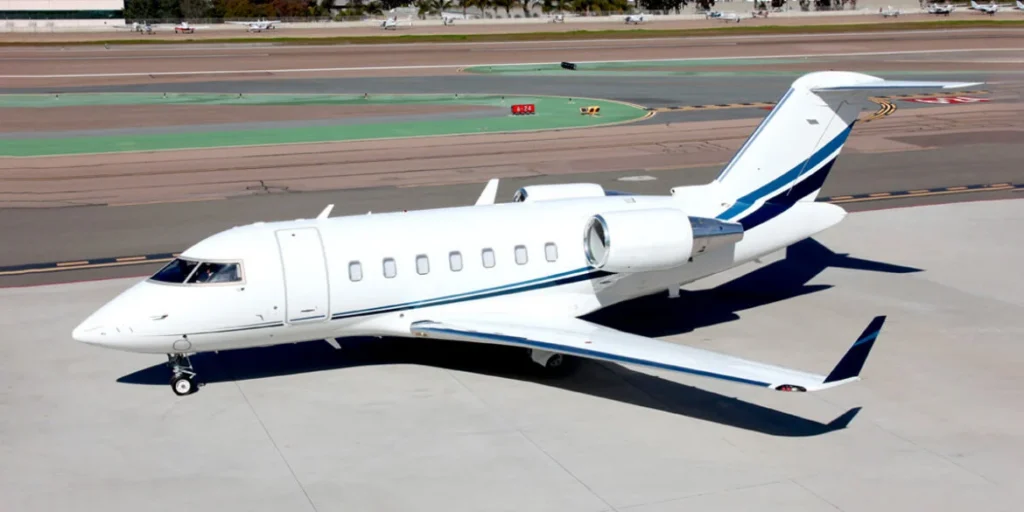
An owner decides to place their Light Jet on a Part 135 charter certificate to “offset costs.” While the charter revenue covers the pilot salaries and hangar fees, the aircraft accumulates 600 hours a year instead of 200. Three years later, the aircraft is 1,200 hours “ahead” of its peers. The depreciation hit at resale often exceeds the net profit earned from the charter operations.
Scenario 2: The “Naked” Engine
A mid-size jet is purchased without being enrolled in an engine maintenance program (like ESP or MSP). The owner saves $300 per hour in program fees. However, upon reaching the 10-year mark, the engine overhaul requirement arrives with a $1.2M price tag. Because the aircraft was not “on program,” the market value had been discounted by the full $1.2M for years, making the asset nearly impossible to sell mid-term.
Scenario 3: The Interior Mismatch
An owner installs a highly personalized, avant-garde interior with bold colors and specific branding. While the quality is high, the “aesthetic depreciation” is massive because the pool of potential buyers is narrowed to those with the exact same taste. A neutral, “OEM-plus” interior remains the most effective hedge against resale friction.
Planning, Cost, and Resource Dynamics
The financial planning required to address how to manage private jet depreciation must account for both direct and opportunity costs.
Estimated Annual Depreciation Ranges (By Class)
-
Light Jets: 8% – 12% annually.
-
Mid-Size Jets: 10% – 14% annually.
-
Large Cabin / Ultra-Long Range: 12% – 18% annually (highly sensitive to new model announcements).
The resource dynamics are often counterintuitive. For instance, the cost of keeping an aircraft in a climate-controlled hangar rather than on a ramp is a direct OpEx increase, but it prevents the “environmental depreciation” caused by UV damage to paint and seal degradation. In coastal areas, the lack of a hangar can lead to corrosion—a “failure mode” that can permanently devalue an airframe by 30% or more.
Strategic Mitigation Tools and Support Systems
-
Maintenance Tracking Software: Systems like CAMP or Jet Support allow for a transparent “digital twin” of the aircraft’s history. An aircraft with a “clean” and organized digital history sells faster and for more money.
-
Hourly Cost Maintenance Programs (HCMP): Enrolling engines, APUs, and even airframes in programs (e.g., Rolls-Royce CorporateCare, Honeywell MSP) effectively “stops” the depreciation associated with upcoming overhauls.
-
Pre-Purchase Inspection (PPI) Neutrality: Managing depreciation involves knowing the aircraft’s flaws before the buyer’s inspector finds them. Conducting “pre-PPI” audits allows an owner to fix issues on their own terms.
-
Connectivity Upgrades: In the current market, a jet without high-speed Ka-band or Ku-band Wi-Fi is considered functionally deficient. This is no longer a luxury; it is a baseline for value retention.
-
Professional Management Firms: Outsourcing oversight to a firm that understands the “marketability” of specific maintenance choices prevents emotional or uniformed decision-making.
Taxonomy of Risk and Failure Modes
Depreciation can be accelerated by specific “Black Swan” events or systemic failures:
-
The “Orphan” Risk: A manufacturer goes bankrupt or ceases support for a specific model. Parts availability plummets, and depreciation accelerates to 40% or more annually.
-
Damage History: Even a minor “hangar rash” incident, if documented poorly, creates a permanent “diminution of value” (DOV). The market typically discounts an aircraft with damage history by 10% to 20%, regardless of the quality of the repair.
-
Regulatory Stranding: New emissions standards or noise abatement laws could render certain older “Stage 3” aircraft illegal to fly in key markets (like Europe or Southern California), effectively ending their economic life.
Governance, Maintenance, and Long-Term Adaptation
Maintaining the value of an aviation asset requires a rigorous governance structure. It is not enough to simply follow the manufacturer’s “Chapter 5” maintenance manual; one must also anticipate market expectations.
Quarterly Review Checklist:
-
Market Position Audit: Compare current tail value against similar listings in the AMSTAT or JETNET databases.
-
Program Status: Verify all engine and airframe program payments are current and that the “transferability” of these programs is intact.
-
Cosmetic Audit: Evaluate the condition of leading edges, brightwork, and high-traffic carpet areas.
-
Logbook Integrity: Ensure all 8130-3 forms (airworthiness tags) are physically or digitally present for every part installed in the last 90 days.
This governance ensures that when the decision to sell is made, the aircraft is “market-ready” within 48 hours. A “market-ready” aircraft avoids the “stale listing” syndrome, where a jet sits on the market for 180+ days, forcing a price reduction.
Measurement and Evaluation Frameworks
Quantifying how to manage private jet depreciation requires a blend of lagging and leading indicators.
-
Lagging Indicator: The actual sold price vs. the bluebook value at the time of sale.
-
Leading Indicator: The “Days on Market” (DOM) average for the specific make/model. If DOM is increasing across the fleet, the asset’s depreciation is likely accelerating.
-
Qualitative Signal: The feedback from maintenance technicians during a heavy check. Are they finding unexpected corrosion? This is a “silent” depreciation factor.
Documentation Examples:
-
The “Pedigree” Folder: A curated collection of all major service center records (e.g., Duncan Aviation, West Star, or OEM centers like Gulfstream Savannah).
-
The Component Life-Limit Map: A spreadsheet showing exactly when every major “time-continued” part will need replacement over the next 24 months.
Common Misconceptions and Oversimplifications
-
Myth: “New paint and leather will increase the value of my jet.”
-
Correction: It rarely increases value; it primarily increases liquidity. It helps the jet sell faster, but you seldom recoup the full cost of the refurb.
-
-
Myth: “Low flight hours always mean higher value.”
-
Correction: Extremely low hours on an old jet can be a red flag for “corrosion through inactivity.” Seals dry out, and engines need to run to stay healthy.
-
-
Myth: “I don’t need an engine program; I’ll just self-insure.”
-
Correction: The market doesn’t trust your “self-insurance.” A buyer will still discount the price by the cost of the program they wish you had been paying into.
-
Synthesis of Long-term Asset Stability
The management of private jet depreciation is ultimately a discipline of anticipation. It requires an owner to look three to five years into the future, predicting the intersection of technological progress, regulatory shifts, and global economic cycles. The aircraft is a melting ice cube; the goal is to ensure that while the ice melts, the core value remains structured and usable until the very moment of transition.
By treating maintenance as a capital preservation strategy rather than a burdensome expense, and by maintaining a “sale-ready” posture through meticulous documentation and program enrollment, an owner can navigate the complexities of the aviation market. In a domain where millions can be lost through a single overlooked inspection or a poorly timed cabin refurbishment, the “senior editorial” approach to management—prioritizing depth, nuance, and long-term perspective—remains the only viable path to fiscal stability.